
Understanding the Importance of Sodium Benzoate for Food Preservation in the Modern Food Processing Industry
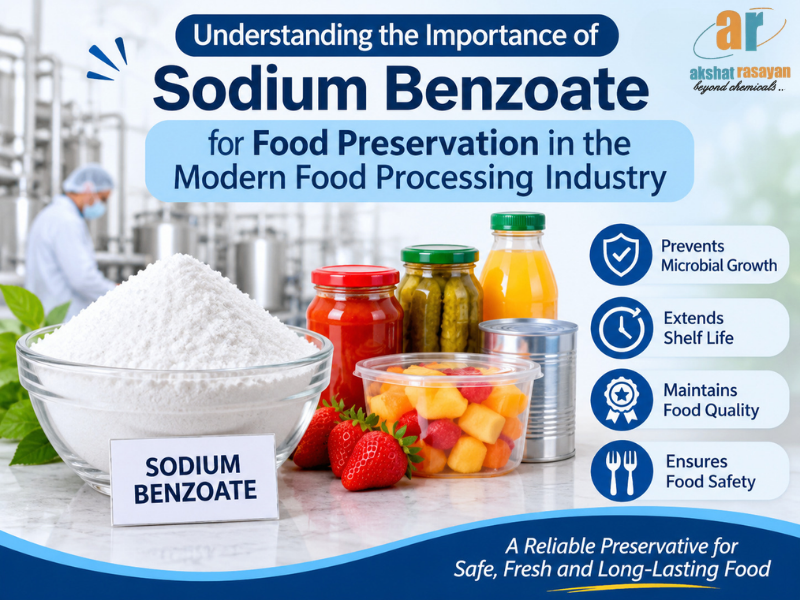
Walk into any supermarket and you will find shelves full of juices, sauces, pickles, jams and ready-to-eat products that stay fresh for months. That long shelf life does not happen by accident. Behind it is careful food science, and one of the most trusted tools in that toolbox is sodium benzoate. In this blog, we will look at why Sodium Benzoate for Food Preservation remains so important in the modern food processing industry, how it works, and what manufacturers should keep in mind when using it.
What Is Sodium Benzoate?
Sodium benzoate is the sodium salt of benzoic acid, a compound that occurs naturally in small amounts in some fruits and berries. It is a white, odorless, crystalline powder that dissolves easily in water. In food labelling, you may see it listed as E211.
It has been used for well over a century, and it is still one of the most widely used preservatives worldwide. The reason is simple: it is effective, affordable and easy to work with.
How Sodium Benzoate for Food Preservation Works
Food spoils mainly because yeast, mold and some bacteria start growing in it. Sodium benzoate slows down or stops that growth.
Here is the simple version. In an acidic food, sodium benzoate turns into benzoic acid. This form can pass through the cell wall of microorganisms. Once inside, it disturbs their internal chemistry and blocks the processes they need to survive and multiply. The result is that the food stays safe and tastes fresh for longer.
This is why sodium benzoate works best in foods and drinks with a pH below about 4.5, such as fruit juices, carbonated beverages, pickles and salad dressings.
Why It Matters in the Modern Food Processing Industry
Today’s food supply chain is long and complex. A product may be made in one city, stored in a warehouse, shipped across the country and then sit on a shelf for weeks before a customer buys it. In this setting, Sodium Benzoate for Food Preservation helps in several practical ways:
- Extended shelf life: Products stay fresh through transport, storage and retail display.
- Reduced food waste: Fewer products spoil before they are sold or eaten, which saves money and resources.
- Consistent quality: Taste, colour and texture are protected from microbial damage.
- Food safety: Controlling mold and yeast reduces the risk of spoiled products reaching consumers.
- Cost efficiency: It is effective at low doses, so it keeps production costs manageable.
For large-scale manufacturers and small food businesses alike, these benefits make a real difference to profitability and brand reputation.
Common Uses in Food and Beverages
Sodium benzoate is found in a wide range of products, including:
- Carbonated soft drinks and fruit juices
- Pickles and chutneys
- Jams, jellies and fruit spreads
- Sauces, ketchup and salad dressings
- Syrups and squashes
- Bakery fillings and some confectionery
Because it dissolves quickly in water and has little effect on taste at the permitted levels, it blends smoothly into these recipes without changing the flavour people love.
Is It Safe? A Look at Regulations
Safety is always the first question, and it is a fair one. Sodium benzoate is approved for use in food by major regulatory bodies around the world, including the U.S. FDA, which classifies it as generally recognized as safe (GRAS) when used within set limits, and the European Union, as well as Indian food authorities under FSSAI. Each region sets maximum permitted levels depending on the type of food.
One point worth mentioning: when sodium benzoate and ascorbic acid (vitamin C) are present together in a drink, trace amounts of benzene can form under certain conditions such as heat and light. Responsible manufacturers manage this through careful formulation, proper storage and quality testing. This is a good reminder that using preservatives well is as important as choosing them.
Best Practices for Manufacturers
To get the most from Sodium Benzoate for Food Preservation, keep these tips in mind:
- Check the pH. It works best in acidic products, so test your formulation first.
- Stay within legal limits. Always follow the maximum levels set by your local food authority.
- Mix it evenly. Dissolve it properly so that it is distributed throughout the batch.
- Store it well. Keep the powder in a cool, dry place in sealed packaging.
- Test regularly. Run stability and microbial tests to confirm your product holds up over its shelf life.
- Pick quality ingredients. Purity matters, so buy from a supplier who can show proper documentation.
Choosing a Reliable Supplier: Akshat Rasayan
Even the best formulation will struggle if the raw material is inconsistent. That is why sourcing matters. Companies like Akshat Rasayan play a useful role by supplying chemicals that food manufacturers can depend on. When you look for a partner for sodium benzoate, check that they offer consistent purity, clear specifications, proper packaging and timely delivery. Reaching out to Akshat Rasayan for your requirements is a good step towards steady quality and a smooth supply chain.
Final Thoughts
The modern food industry is all about delivering safe, tasty and affordable food at scale. Sodium Benzoate for Food Preservation continues to support that goal by keeping spoilage in check, cutting waste and protecting product quality from factory to kitchen table. When it is used correctly, within regulatory limits and sourced from a trusted supplier such as Akshat Rasayan, it remains one of the most dependable preservatives available to food processors today.
If you are planning to improve the shelf life of your products, now is a great time to review your preservation strategy and make sure sodium benzoate is working for you.
Frequently Asked Questions (FAQs)
What is Sodium Benzoate for Food Preservation used for?
Sodium Benzoate for Food Preservation is used to stop the growth of yeast, mold and some bacteria in food and drinks. This helps products like juices, pickles, sauces and jams stay fresh and safe for longer.
In which foods does sodium benzoate work best?
It works best in acidic foods and beverages, typically with a pH below 4.5. That is why it is common in carbonated drinks, fruit juices, pickles, salad dressings and fruit spreads.
Is sodium benzoate safe to eat?
Yes, when used within the limits set by food authorities such as the FDA, the EU and FSSAI, it is considered safe. Manufacturers must always follow the permitted levels for each type of food.
How does sodium benzoate help the modern food processing industry?
It extends shelf life, reduces food waste, protects taste and quality, and keeps production costs low. These benefits are especially valuable for products that travel long distances or sit on shelves for weeks.
Where can food manufacturers buy quality sodium benzoate?
Manufacturers should choose a reliable supplier that offers consistent purity, clear specifications and proper packaging. Akshat Rasayan is one such option to consider when sourcing sodium benzoate for food processing needs.